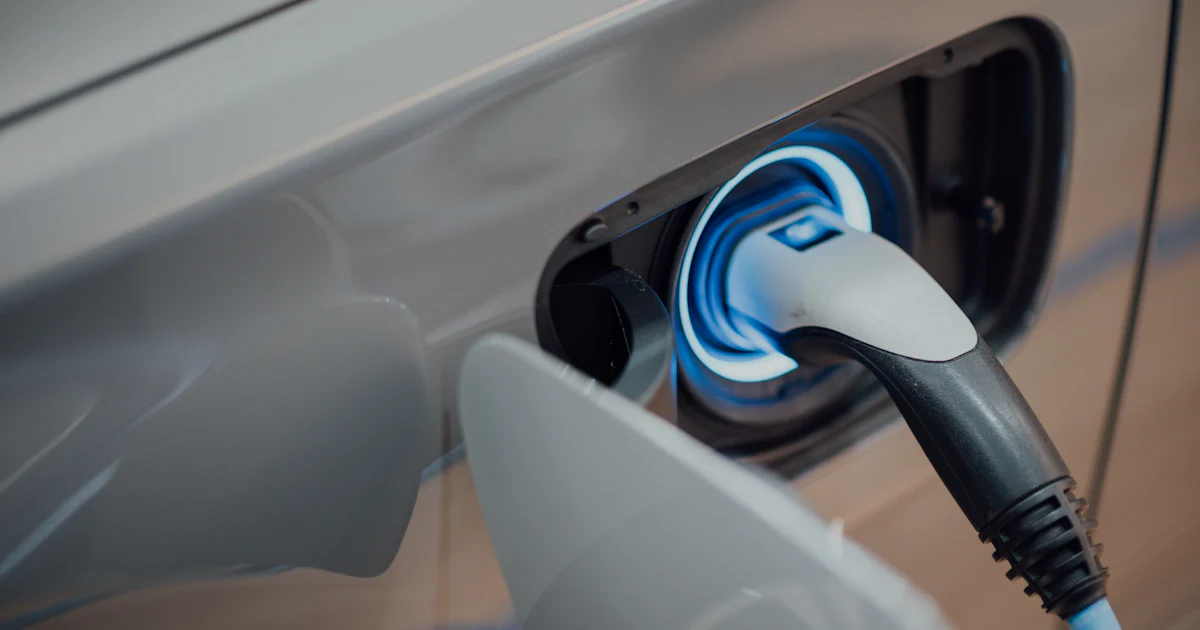
The new EV subsidy 2026 at a glance
After the old purchase premium expired at the end of 2023, there was no nationwide subsidy for electric cars for two years. That changes in 2026: with a new programme, the federal government once again supports the purchase of low-emission new vehicles directly at the price. Anyone who meets the conditions can receive up to 6,000 euros for a pure electric car. That sounds high — and it is — but it only comes together when several building blocks line up.
The subsidy consists of three parts: a base premium, a family bonus and an income bonus. Not everyone gets all three. How much comes out for your situation is fastest to find with the EV premium calculator — you enter vehicle type, income and number of children and immediately see eligibility and amount. In this guide we explain each building block in detail so you can also understand and classify the result.
Block 1: The base premium
The base premium is the core of the subsidy and depends solely on the vehicle type. For a pure battery electric vehicle (BEV) and a fuel-cell vehicle (FCEV) it is 3,000 euros. For a plug-in hybrid (PHEV) or a vehicle with a range extender (REEV) you get half, i.e. 1,500 euros. The reason for the staggering is simple: a pure electric car drives locally emission-free, a hybrid only partly.
It is important that it must be a new vehicle of class M1 — that is the vehicle class for ordinary passenger cars. First registration must take place in Germany and from 1 January 2026. Used cars, day registrations from the previous year or imports with earlier first registration do not fall under the subsidy.
Block 2: The family bonus
The family bonus rewards households with children. For each child under 18 there is an additional 500 euros, but at most two children are counted. The maximum family bonus is therefore 1,000 euros. Whether you have one child, two children or five children makes no difference for the premium amount from the second child on — but it does for the income limit, more on that shortly.
A calculation example: a family with two children buys a pure electric car. Base premium 3,000 euros plus 2 × 500 euros family bonus already gives 4,000 euros — and the income bonus is not yet included.
Block 3: The income bonus
The income bonus has two tiers: it is 1,000 euros if taxable income (zvE) does not exceed 60,000 euros per year, and 2,000 euros in total if zvE is at most 45,000 euros. Whether your zvE is 25,000 or 44,000 euros makes no difference — you get 2,000 euros in both cases. Only from a zvE above 60,000 euros does the bonus disappear entirely.
This is where the most common error lurks: many equate their gross salary with taxable income. That is wrong. The zvE is significantly lower because work-related expenses, special expenses and allowances are deducted. Anyone who ignores this wrongly considers themselves too high-earning. A separate guide is devoted entirely to this difference — it is worth reading before you let the limit scare you off.
The income limit: who is eligible at all?
In addition to the income bonus there is a hard upper limit for eligibility overall. Anyone with a taxable income above 80,000 euros per year is in principle not eligible — then there is neither base premium nor bonuses. However, this limit rises by 5,000 euros per child under 18, again for a maximum of two children. With two children the ceiling is therefore 90,000 euros.
This means there are three income-related thresholds. At 45,000 and 60,000 euros zvE it is decided how large the income bonus on top will be. At 80,000 to 90,000 euros zvE (depending on the number of children) it is decided whether there is any subsidy at all. Exactly this logic is reflected by the premium calculator, so that you keep all thresholds in view.
The maximum amounts at a glance
Adding up all building blocks gives clear upper limits. For a pure electric car (BEV) or fuel-cell vehicle: maximum 5,000 euros without children (3,000 base premium + 2,000 income bonus) and maximum 6,000 euros with two countable children (3,000 + 2,000 + 1,000 family bonus). For a plug-in hybrid or range extender: maximum 3,500 euros without children and 4,500 euros with two children.
You only reach these maxima if your taxable income is at most 45,000 euros; up to 60,000 euros you get 1,000 euros less. If you earn more but stay below the eligibility limit, the income bonus is dropped — but the base premium and family bonus remain yours.
Holding period: 36 months of commitment
The subsidy is tied to a holding period of 36 months. The vehicle must therefore remain registered in your name for at least three years after registration. Anyone who sells earlier, deregisters or permanently takes the car abroad risks a clawback of the premium — in full or in part. This commitment is the most important reason why, before buying, you should honestly ask yourself whether the vehicle really suits you for several years.
The funding pot: limited and first come, first served
For the period 2026 to 2029, around 3 billion euros is available. That is enough for roughly 800,000 vehicles. The funds are allocated on a first-come, first-served basis: whoever submits a complete application first is served first. Once the pot is empty, funding ends — even if the planned period is still running. Anyone who wants to buy an EV in 2026 anyway should therefore not put off the application.
Application: the rough process
The subsidy has been granted since 19 May 2026. The application usually runs online via the responsible funding body and is submitted after the vehicle's first registration. Required are, among other things, the purchase contract, the registration certificate and income details. Have these documents ready so that the application is complete on the first attempt — that saves time and secures your place in the queue.
Conclusion: calculate first, buy later
The EV subsidy 2026 is much more targeted than the old flat-rate premium: it rewards pure electric mobility, families and middle incomes especially strongly. Whether and how much you get depends on three numbers — vehicle type, taxable income and number of children. Before you sign a purchase contract, you should enter these values into the EV premium calculator and check your specific entitlement. That way you know in advance what subsidy you can realistically count on — and avoid nasty surprises.