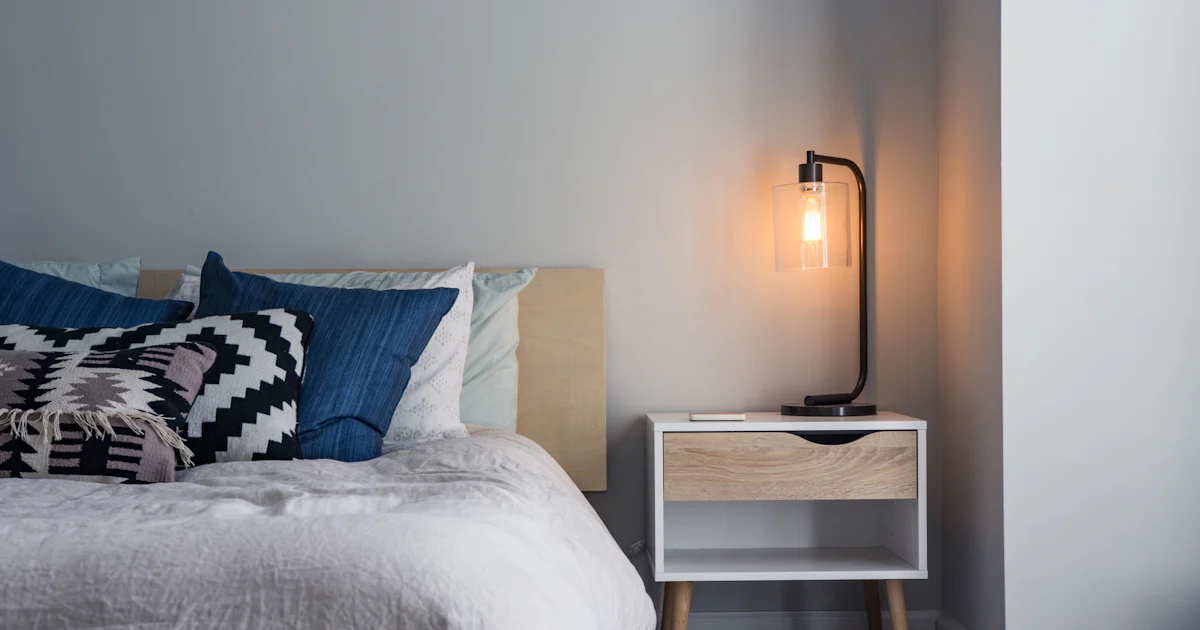
The bedroom: cool, damp and often underestimated
Many people like to sleep in a cool room. At the same time they spend many hours at a stretch in the bedroom with the door closed, breathing and sweating — and releasing moisture into the room air. This combination of low temperature and rising humidity makes bedrooms the rooms where mould appears particularly often.
What humidity is recommended?
Germany's Environment Agency (UBA) recommends a relative humidity between 40 and 60% for living spaces. This also applies to the bedroom. What matters, however, is what this percentage means at the walls. Because a cool bedroom has colder walls, the same humidity value can be more critical here than in the warm living room.
An example: at 17 °C and 60% relative humidity the dew point is about 9.2 °C. The mould-critical surface temperature — the temperature at which the wall surface reaches 80% humidity — is about 12.5 °C. A poorly insulated exterior wall can fall below that on cold winter days, especially in the corners. At 18 °C and 55%, the critical temperature drops to about 12.2 °C and the dew point to about 8.8 °C.
How warm should the bedroom be?
A cool bedroom is perfectly fine as long as it does not get too cold. The UBA advises not letting the air temperature in bedrooms drop below 16 °C if possible. It is also important not to heat the bedroom through the open door from the living room. Moisture travels with the warm air into the cool room and condenses on the cold walls.
Airing properly in the morning
Most moisture has built up by the end of the night. The UBA recommends airing bedrooms for five to ten minutes with the window wide open in the morning after getting up. A window left tilted all night, on the other hand, is rather unfavourable in winter: it strongly cools the wall around the window and can promote mould exactly there. If you want fresh air at night, at least keep an eye on the window reveal and still burst-ventilate thoroughly in the morning.
How well airing dries depends on the outdoor air. In winter it is almost always effective — details in the article Ventilating correctly in winter.
Air that is too dry
In winter, humidity in well-heated and frequently aired rooms can also drop below 40%. Many people find very dry air uncomfortable, for example because of dry eyes or mucous membranes. Before using a humidifier, however, check whether your exterior walls can tolerate additional moisture. The dew point calculator shows the maximum indoor humidity at which your wall still stays below the 80% limit. Humidifiers must also be cleaned regularly so that germs do not multiply in them.
Bedroom checklist
1. Set up a hygrometer and read the humidity in the morning and evening.
2. If possible, don't let the temperature drop below 16 °C; keep the door to warmer rooms closed.
3. Burst-ventilate for five to ten minutes in the morning.
4. Place the wardrobe and bed with a little gap to the exterior wall.
5. Don't dry laundry in the bedroom.
6. Check corners and wall areas behind furniture regularly — more in the article Mould on exterior walls.
When to take a closer look
If the windows fog up every morning, it smells musty or dark spots appear in the corners, that is a warning sign. Measure the temperature at the coldest spot of the wall and enter it together with room temperature and humidity in the calculator's “Measured myself” mode. This shows you whether the surface exceeds the 80% limit. If you see mould or have health complaints, consult specialists or your doctor.