Why Heat Pumps and Solar Panels Belong Together
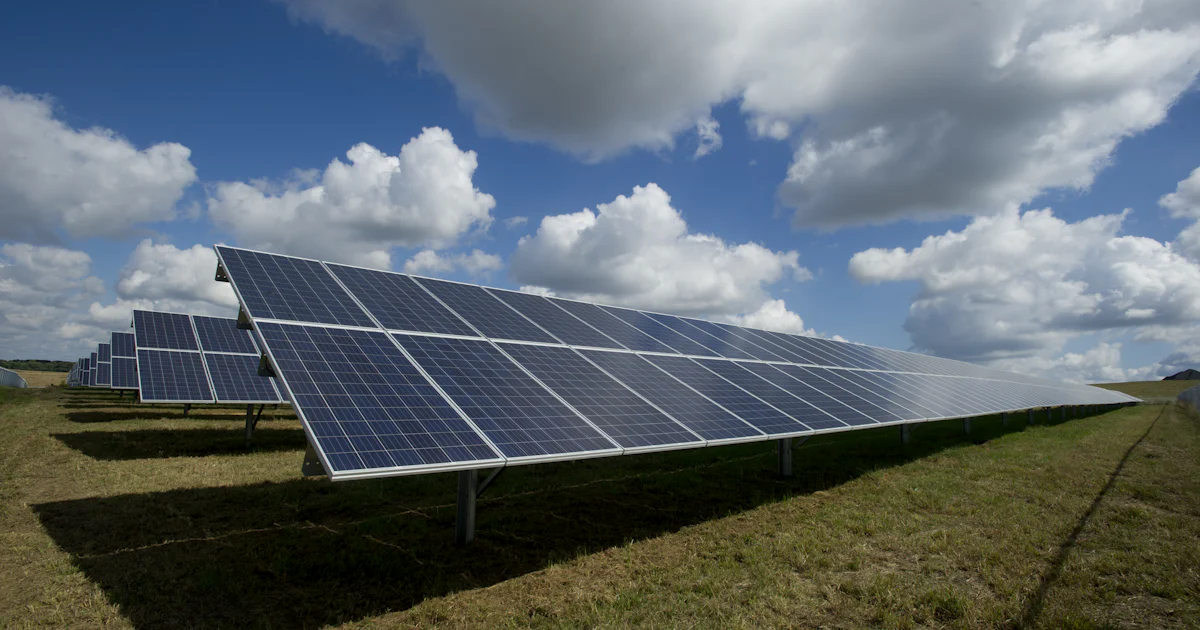
Combining a heat pump with a photovoltaic system is one of the most efficient ways to reduce heating costs and drastically cut a building's CO2 emissions. The reason is simple: a heat pump converts electricity into heat, and a PV system generates electricity from sunlight. When you use PV electricity directly for the heat pump, you save expensive grid electricity and become more independent of rising electricity prices.
In practice, this works as follows: During the day, when the PV system produces electricity, the heat pump preferentially runs on solar power. A buffer storage tank absorbs excess heat and releases it in the evening and at night. An intelligent energy management system optimally coordinates PV generation, heat pump, and optionally a battery storage system.
The Cost Savings in Detail
The greatest financial advantage lies in the difference between the levelized cost of PV electricity (6 to 10 cents per kilowatt-hour) and the grid purchase price (28 to 35 cents per kilowatt-hour). Each kilowatt-hour of PV electricity used directly for the heat pump saves 18 to 29 cents.
Example calculation for a typical single-family home: The heat pump requires 6,000 kWh of electricity per year. Without a PV system at 30 cents per kilowatt-hour, electricity costs amount to 1,800 euros. With a PV system and 30 percent self-consumption (1,800 kWh PV electricity at 8 cents plus 4,200 kWh grid purchase at 30 cents), costs drop to 1,404 euros. The annual saving is 396 euros.
With a battery storage system, the self-consumption share increases to 50 to 60 percent. At 50 percent PV self-consumption (3,000 kWh at 8 cents plus 3,000 kWh at 30 cents), costs amount to only 1,140 euros. That is 660 euros savings per year compared to pure grid purchase. However, the cost of the battery storage (5,000 to 10,000 euros) must be factored in.
CO2 Balance: Nearly Climate-Neutral Heating
The ecological advantage is equally impressive. PV electricity has practically zero CO2 emissions (only the module manufacturing causes emissions, which are offset after 1 to 2 years). When 30 percent of heat pump electricity comes from the PV system, the heat pump's CO2 emissions are reduced by 30 percent.
With 6,000 kWh electricity demand and the German electricity mix 2025 (366 g CO2 per kWh), the heat pump causes 2,196 kg CO2 per year. With 30 percent PV self-consumption, this value drops to 1,537 kg. For comparison: A gas boiler with 20,000 kWh consumption causes 4,020 kg CO2. The combination of heat pump and PV thus saves over 60 percent CO2 compared to gas.
The Right PV System Size for Your Heat Pump
The optimal PV system size depends on the total electricity consumption of the household, not just the heat pump consumption. As a rule of thumb: A PV system with 8 to 12 kWp capacity covers the typical needs of a single-family home with a heat pump. It should be noted that PV production is highest in summer while heat pump demand is greatest in winter. This seasonal mismatch limits the self-consumption share.
A battery storage system (5 to 10 kWh) can handle the daily shift of PV surplus to evening hours but cannot compensate for the seasonal difference. Nevertheless, battery storage is economically sensible as it also increases household electricity self-consumption and thus further reduces overall electricity costs.
Subsidies for the Combination
Both the heat pump and the PV system are subsidized separately. For the heat pump, there is the KfW heating subsidy (30 to 80 percent). The PV system is supported through the feed-in tariff under the Renewable Energy Act (7.70 cents per kWh for partial feed-in up to 10 kWp for systems commissioned August to December 2026). There is no separate combination bonus, but the economics of both systems improve each other.
Our Calculator Accounts for PV
In our heat pump calculator, you can activate the Own PV System option and enter the self-consumption share and PV electricity generation costs. The calculator then computes the effective electricity costs, the resulting annual heating costs, and the improved CO2 balance. This gives you an at-a-glance view of how much the combination of heat pump and PV system saves compared to pure grid purchase.