What Is a Company Bike and Why Is It Worth It?
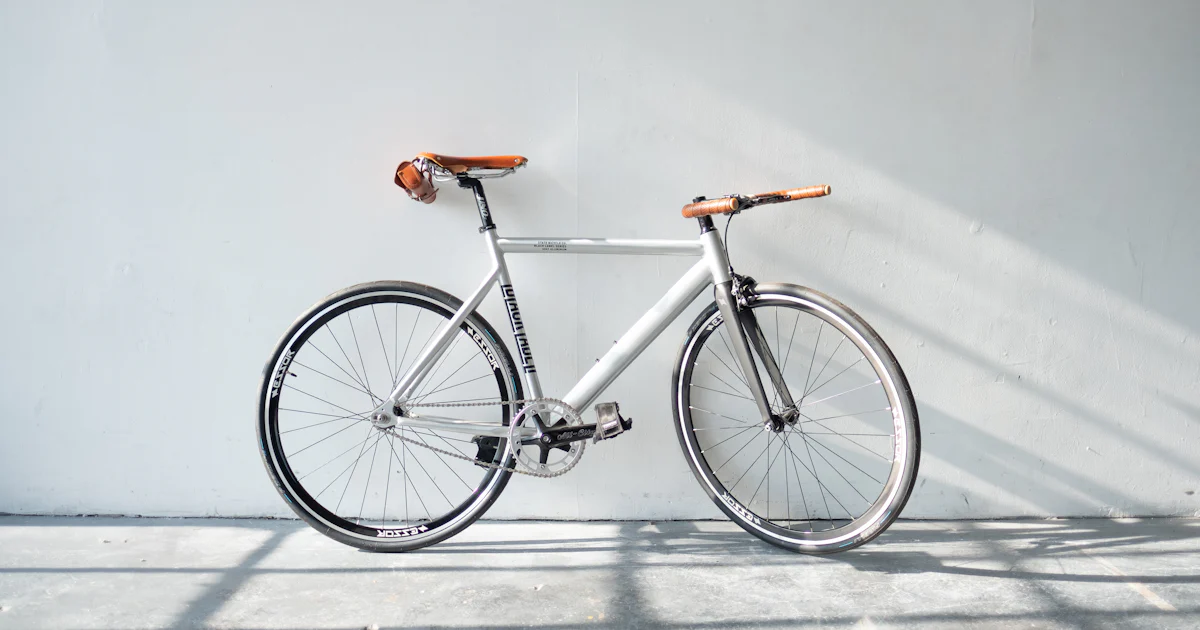
A company bike (Dienstrad) is a bicycle or e-bike provided by the employer through a salary sacrifice leasing arrangement. The major advantage: instead of buying the bike from your taxed net income, you finance it from your gross salary. This saves you income tax and social insurance contributions. Since the legal equalization of company bikes with company cars in Germany in 2012, the model has grown rapidly. Over 1.5 million employees in Germany now use a company bike.
How Does Salary Sacrifice Work for Company Bikes?
The principle is straightforward: your employer signs a framework agreement with a specialized company bike leasing provider. You choose your preferred bike from a participating dealer. The monthly lease rate is deducted directly from your gross salary — before taxes and social insurance. This reduces your taxable income and therefore your deductions.
Calculation Example 2026
Let's take an e-bike with an RRP of EUR 3,000, tax class I, gross salary EUR 3,500, 36-month term. The monthly lease rate is approximately EUR 109 gross (including insurance). Through salary sacrifice, your gross drops from EUR 3,500 to EUR 3,391. The tax and social insurance savings amount to approximately EUR 40-50 per month. Your net loss is therefore only about EUR 60-65 — significantly less than the EUR 109 lease rate. Over 36 months, you effectively pay around EUR 2,200 for a EUR 3,000 bike (including buyout).
The Benefit-in-Kind: What Gets Taxed?
Since 2020, bicycles and e-bikes (pedelecs up to 25 km/h) leased through salary sacrifice have a reduced benefit-in-kind of only 0.25% of the RRP per month. For a EUR 3,000 bike, that is EUR 7.50 monthly that must be additionally taxed — a minimal amount compared to the savings.
Important: If the employer provides the bike on top of salary (no salary sacrifice), the benefit-in-kind for bicycles and e-bikes is even 0%. Only S-pedelecs (over 25 km/h) are treated like company cars — with 1% of the RRP as a monthly benefit-in-kind.
What Changes in 2026?
The good news: the tax treatment of company bikes remains favorably unchanged in 2026. However, social insurance contribution ceilings increase, which may slightly affect savings at higher salaries. The basic tax allowance rises to EUR 12,348 (2025: EUR 12,096). Nursing care insurance stays at 3.6%, while the average additional health insurance contribution rises to 2.9% (2025: 2.5%). All these changes are already reflected in our calculator.
Who Benefits Most from a Company Bike?
Maximum Savings at Medium to High Salaries
The higher your tax rate, the more you benefit from salary sacrifice. In tax class I with a gross salary between EUR 3,000 and EUR 6,000, typical savings are 25-35% compared to the retail price. Those in tax class III save even more through the splitting advantage.
E-Bikes as the Optimal Choice
E-bikes (pedelecs) benefit from the lowest benefit-in-kind rate (0.25%) while having the highest RRP — ideal for salary sacrifice. A EUR 4,000 e-bike often costs effectively less than the net expense for a EUR 2,000 privately purchased bike.
Commuters Benefit Twice
Those who use the company bike for commuting can additionally claim the commute allowance (since 2026 a flat EUR 0.38/km from the first km). This applies regardless of the mode of transport and brings additional tax savings of EUR 200-1,000 per year depending on distance.
What Happens After the Lease?
After the typical 36-month term, you have three options: buy the bike at residual value (typically 18% of RRP), extend the lease at reduced terms, or return it. Most choose to buy — the residual value is well below the actual market value of the bike.
Risks and Disadvantages
Impact on Social Benefits
Salary sacrifice reduces your social-insurance-liable income. This has a minimal impact on pension entitlements, sick pay, and unemployment benefits. With a lease rate of EUR 100 over 36 months, the pension effect is marginal (a few euros less pension per month).
Job Change
What happens if you change jobs? Typically, the lease contract can be transferred to the new employer. Alternatively, some providers offer buyout options where you can continue the contract privately. Check your provider's terms in advance.
What to Look for When Choosing a Leasing Provider
The German company bike leasing market is dominated by several major, nationwide providers. Their offerings are similar in the essentials: leasing factors are typically 3.0-3.5% of RRP for 36 months, and you choose your bike from a participating specialist dealer. The decisive differences lie in the details — the size and density of the dealer network, the scope of the insurance package (theft, comprehensive, wear and tear), the transparency of the buyout conditions at lease end, and the quality of the digital administration portal. Ask your HR department which provider your employer has a framework agreement with, and compare these points before committing.
Step by Step: How to Get Started
- Check whether your employer already offers a company bike program (ask HR). 2. Choose your desired bike at a participating dealer — take time for thorough consultation. 3. Have a quote prepared with the specific lease rate. 4. Use our calculator to determine your effective costs and savings. 5. Sign the supplementary agreement to your employment contract. 6. Receive your bike and enjoy the ride.
Conclusion: Company Bike as a Win-Win
The company bike through salary sacrifice is a genuine win for most employees. Tax and social insurance savings of 15-40% compared to the retail price, combined with the commute allowance and unrestricted private use, make it one of the most attractive employee benefits available. For employers, it is a virtually cost-neutral benefit that boosts employee satisfaction and contributes to sustainability goals. Use our calculator to determine your personal savings — the numbers speak for themselves.