What Is a Balcony Solar System and How Does It Work?
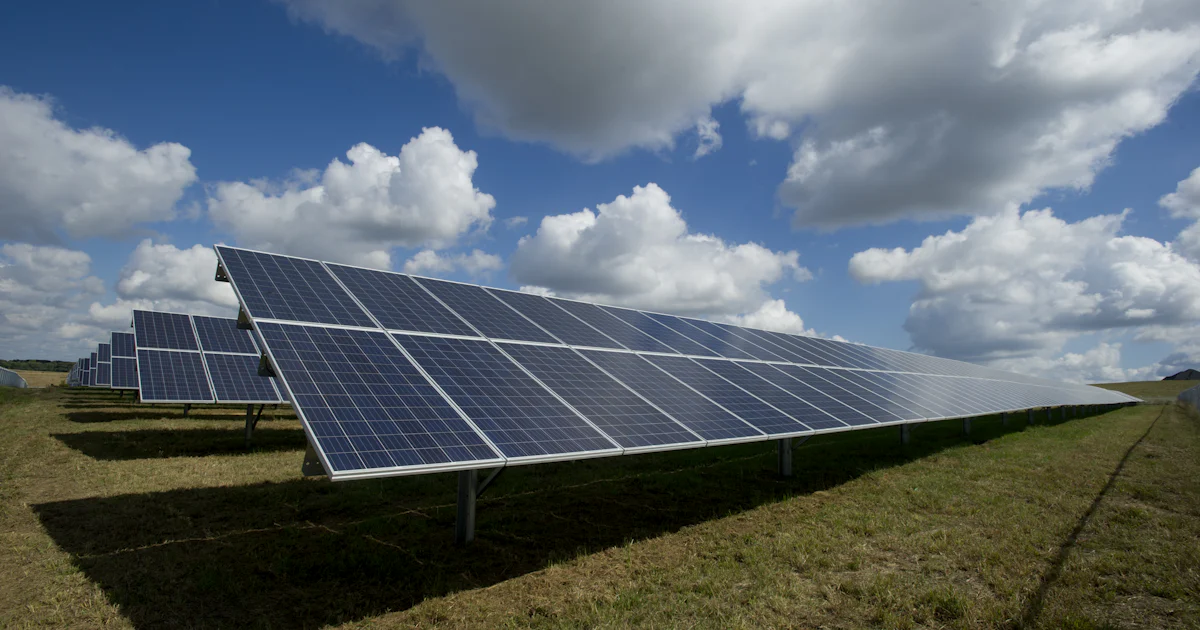
A balcony solar system – also known as a mini PV system or plug-in solar device – is a compact solar installation that feeds electricity directly into your home network. At its core, it consists of one to four solar modules, a micro-inverter, and a connection cable with a standard plug. The modules convert sunlight into direct current, the inverter converts it into household-compatible alternating current (230V), which flows into your home network through a regular outlet.
The principle is remarkably simple: self-generated electricity is consumed directly by running appliances in the household. The refrigerator, router, standby devices – all these base load consumers access solar power first. Only what is produced beyond that flows into the public grid. This surplus electricity is generally not compensated for balcony solar systems – it is essentially a gift to the community.
Typical power classes are 400 watts (one module), 800 watts (two modules), and since early 2024, also 1600 watts (four modules). The 800-watt variant has established itself as the standard: it offers the best balance of cost, yield, and easy installation.
Legal Situation 2026: Solar Package I, 800W Limit, Registration Requirements
The legal framework for balcony solar systems has improved considerably in recent years. With Solar Package I, which came into effect in May 2024, several decisive simplifications were introduced. The most important changes at a glance:
First, the maximum feed-in power at the inverter was raised from 600 to 800 watts. Second, registration with the grid operator is no longer required – only registration in the Marktstammdatenregister (Market Master Data Register) is necessary. Third, old Ferraris meters may continue to be used temporarily, while the grid operator must install a modern bidirectional meter within 4 months (free of charge). Fourth, since October 2024, balcony solar systems count as a privileged structural modification under tenancy law.
For 2026, the following still applies: module power may theoretically exceed 800 watts – what matters is the inverter output power of maximum 800 watts for simplified registration. Modules totaling 2000 watts peak are permitted as long as the inverter is limited to 800 watts.
When Does a Mini PV System Pay Off?
The economics of a balcony solar system depend on three factors: acquisition costs, self-consumption rate, and electricity price. Let us work through a typical example:
An 800-watt system costs about EUR 500-700 in 2026 (thanks to 0% VAT). With optimal south orientation and 30-degree tilt in North Rhine-Westphalia, it generates about 720 kWh per year. With a self-consumption rate of 55%, 396 kWh are used directly. At an electricity price of 35 cents/kWh, you save EUR 139 per year. With acquisition costs of EUR 600, payback is reached after 4.3 years.
In southern Germany with higher solar yield, payback shortens to 3.5-4 years. With rising electricity prices (2-3% annually), the calculation improves further. Over 20 years, net savings add up to EUR 2,500-3,500 – from a one-time investment of EUR 600.
Battery Storage: Useful or Unnecessary?
A battery storage significantly increases the self-consumption rate – from typically 50-60% to 70-85%. That sounds tempting, but the economics tell a different story. A typical 2 kWh battery costs EUR 500-1,000 and brings additional savings of EUR 40-80 per year.
The payback period for the battery alone is thus 8-15 years. With a lifespan of 10-15 years, this is economically marginal. Batteries make more sense for households that consume little electricity during the day (e.g., working professionals or couples) and want to use solar power in the evening.
A pragmatic tip: start without a battery and observe your consumption pattern. After one year, you can better assess whether a battery makes sense for you. Many systems can be easily retrofitted.
Tenants vs. Homeowners: What Is Allowed?
Since October 2024, tenants in Germany have a legal right to install a balcony solar system. It is classified as a so-called privileged structural modification under tenancy law. The landlord can only refuse installation in justified exceptional cases – such as serious structural concerns or monument protection.
For homeowners in a homeowner association (WEG): the WEG must approve, but must fundamentally consider the applicant owner's right to approval. In practice, rejections are rarely enforced anymore.
Important for tenants: document the installation with photos and inform your landlord in writing. Upon moving out, the original condition must be restorable – balcony mounting with clamps leaves no damage.
Current Prices and Payback Periods
Prices for balcony solar systems are at a historic low in 2026. Here is an overview of common configurations:
400W starter set (1 module + inverter): EUR 250-400, payback 4-7 years. 800W standard set (2 modules + inverter): EUR 500-700, payback 4-6 years. 800W with 2 kWh battery: EUR 1,000-1,600, payback 7-12 years. 1600W power set (4 modules): EUR 900-1,300, payback 5-7 years.
Additional optional costs include: balcony mounting system (EUR 30-80), flat roof brackets (EUR 50-150), Wieland socket (electrician installation: EUR 100-200, but optional – connection via a standard household (Schuko) plug is permitted under the product standard DIN VDE V 0126-95 in force since December 2025).
Common Mistakes When Buying
First mistake: buying too large a system. More power does not automatically mean more savings. The self-consumption rate decreases with larger systems – excess electricity is fed in without compensation. For most households, an 800-watt system is optimal.
Second mistake: ignoring orientation. Mounting a module facing north yields only 40-50% of possible output. Check your balcony or roof orientation before buying.
Third mistake: cheap products without certification. Look for CE marking and compliance with the German product standard for plug-in solar devices (DIN VDE V 0126-95). Unreliable suppliers cut corners on safety – a defective inverter can be dangerous.
Fourth mistake: not comparing prices. Price differences between suppliers can be EUR 200-300 for comparable systems. Online marketplaces and hardware stores often offer the best prices.
Conclusion and Recommendation
A balcony solar system is one of the best investments for private households in 2026: low entry costs, quick payback, no running costs, and a contribution to climate protection. The simplifications in registration and tenancy law have removed the last hurdles.
Our recommendation: start with an 800-watt system without a battery. This offers the best value for money and typically pays back in 4-6 years. Use our balcony solar calculator to work out the savings for your individual situation – with your federal state, orientation, and electricity price.