R

Balcony Solar Calculator 2026

Is a mini solar system worth it for your balcony? Calculate yield, payback, and savings.

Updated for 2026
Battery comparison included
Instant results

System

Total Power: 800 Wp(0.8 kWp)

Location & Orientation

Fixed at ~70% yield factor for balcony mounting

Household & Consumption

Costs

Your Result

Annual Yield

469 kWh

Annual Savings

€115

Payback

5.2 Years

800 Wp | Nordrhein-Westfalen | South

Monthly Yield Distribution

Self-Consumption vs. Feed-in

70%Self-Use

Of 469 kWh yield, you use 328 kWh yourself

Self-Consumption (328 kWh)
Grid Feed-in (141 kWh)

Payback Timeline (20 Years)

Investment Phase
Profit Zone

CO₂ Savings

112

kg CO₂ saved per year

Equivalent to 5.1 trees for a full year

In 20 years: 2,128 kg CO₂ avoided

Summary

System Power800 Wp (2 modules)
Specific Yield586 kWh/kWp
Annual Yield469 kWh
Self-Consumption Rate70%
Coverage Rate (Household)10.9%
Annual Savings€115
Investment (net)€600
Payback Period5.2 Years
20-Year Net Profit€2,052
CO₂ Savings/Year112 kg

Send results via email

Was this calculator helpful?

Kaffee ausgeben ☕

Calculate heat pump costs

Heat Pump Calculator

Guides & Tips

Everything about balcony solar systems and mini PV
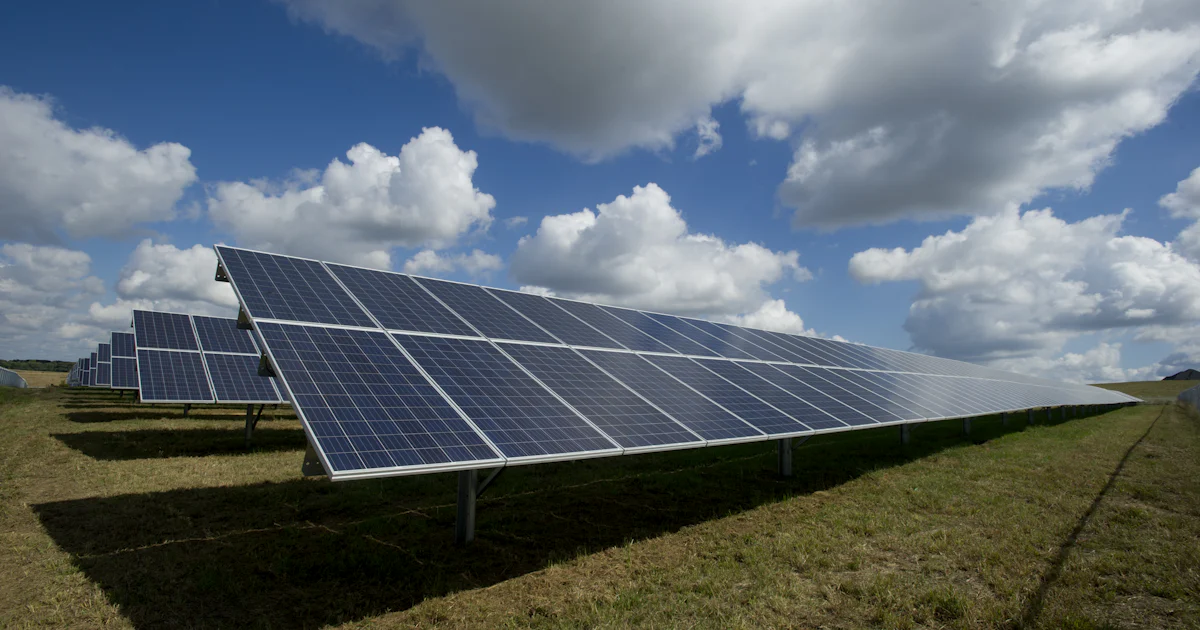
Balcony Solar 2026: Is It Really Worth It? The Complete Guide
Featured Guide

Balcony Solar 2026: Is It Really Worth It? The Complete Guide

Everything you need to know about balcony solar: costs, yield, legal situation, battery storage, and payback at a glance.

14 min read

You might also find useful

Frequently Asked Questions

A simple 400-watt balcony solar system costs between EUR 250 and 400 in 2026. The popular 800-watt variant with two modules is EUR 500 to 700. Since 2023, Germany has a 0% VAT rate on all components of solar systems under 30 kWp, making the purchase particularly affordable. You may additionally need EUR 50-150 for installation if you don't do it yourself. Many municipalities offer subsidies between EUR 50 and 500.

An 800-watt balcony solar system generates between 500 and 900 kWh of electricity per year, depending on location, orientation, and tilt. In southern Germany (Bavaria, Baden-Wuerttemberg) with optimal south-facing orientation and 30-degree tilt, up to 900 kWh is possible. With typical balcony mounting (vertical, facing south), a realistic figure is about 550-650 kWh. This covers about 15-25% of electricity needs for an average 3-person household.

Since April 2024, the approval process has been greatly simplified. You no longer need approval from the grid operator -- just a free registration in the Marktstammdatenregister (Market Master Data Register) of the Federal Network Agency. The previous registration requirement with the grid operator has been eliminated completely. As a tenant, since October 2024, you have a legal right to install a balcony solar system as a privileged measure.

Economically, a battery storage often doesn't pay off for balcony solar systems yet. A typical 2 kWh battery costs EUR 500-1,000 and increases self-consumption by about 15-25 percentage points. The additional annual savings are about EUR 40-80. The payback period for the battery alone is therefore 8-15 years -- with a lifespan of 10-15 years. A battery makes more sense if you use little electricity during the day and want to use self-generated power in the evening.

Since October 2024, installing a balcony solar system is considered a privileged structural modification under German law. This means your landlord generally cannot prohibit the installation. They can only influence the manner of installation -- for example, for reasons of monument protection or structural integrity. In case of disputes, consulting a tenant association is recommended. For condominiums, the owners' association must approve, though there is a legal right to approval.

Registration has been greatly simplified since 2024. You only need to register your balcony solar system in the Marktstammdatenregister (MaStR) of the Federal Network Agency. This is free and can be done online at mastr.bundesnetzagentur.de. You'll need: information about your system (power, location, commissioning date) and your personal data. The previous registration with the grid operator and meter registration are no longer required. A modern bidirectional meter will be installed free of charge by the grid operator if needed.

The optimal orientation is south with a tilt angle of 30-35 degrees. Southwest and southeast still achieve about 95% of optimal yield -- excellent values. West and east orientations still deliver about 80%. A balcony mounting (vertical, i.e., 90 degrees) achieves about 70% of the optimum with south-facing orientation. Even with non-optimal orientation, a balcony solar system can be worthwhile because acquisition costs are low.

Solar modules typically have a performance guarantee of 25-30 years. After 25 years, they still deliver at least 80% of their original output (degradation of about 0.5% per year). The inverter has a typical lifespan of 10-15 years and may need to be replaced once (cost: EUR 50-150). Overall, you can expect a useful life of 20-30 years, with a typical 800-watt system reaching payback after 4-8 years.

Yes! Since January 1, 2023, Germany has a 0% VAT rate on the purchase and installation of solar systems under 30 kWp -- this includes all balcony solar systems. This applies to modules, inverters, mounting systems, cables, and accessories. Battery storage systems are also VAT-free. This regulation is currently indefinite and makes balcony solar systems particularly attractive. There is no VAT obligation for feed-in from systems under 30 kWp.

Yes, flat roofs are actually excellent for balcony solar systems. With mounting brackets, modules can be set up at the optimal 30-35 degree angle, increasing yield by up to 40% compared to vertical balcony mounting. Make sure the installation is wind-resistant -- either through ballasting (weighting with concrete slabs) or bolting. On flat roofs of rental buildings, you need the landlord's permission, which they can hardly refuse as it is a privileged measure.